How Businesses Can Strategically Use WhatsApp in 2026
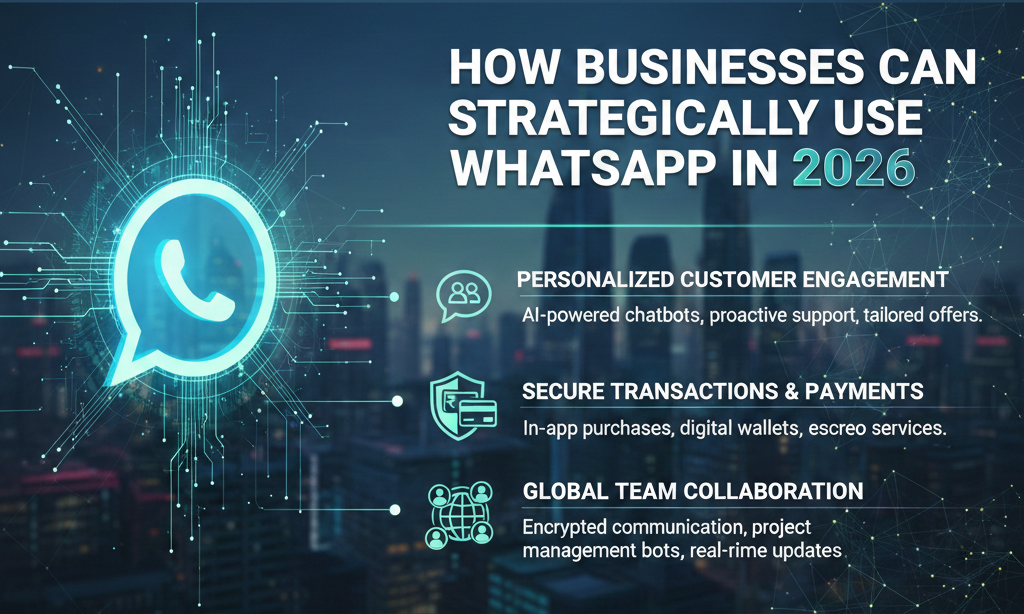
How Businesses Can Strategically Use WhatsApp in 2026
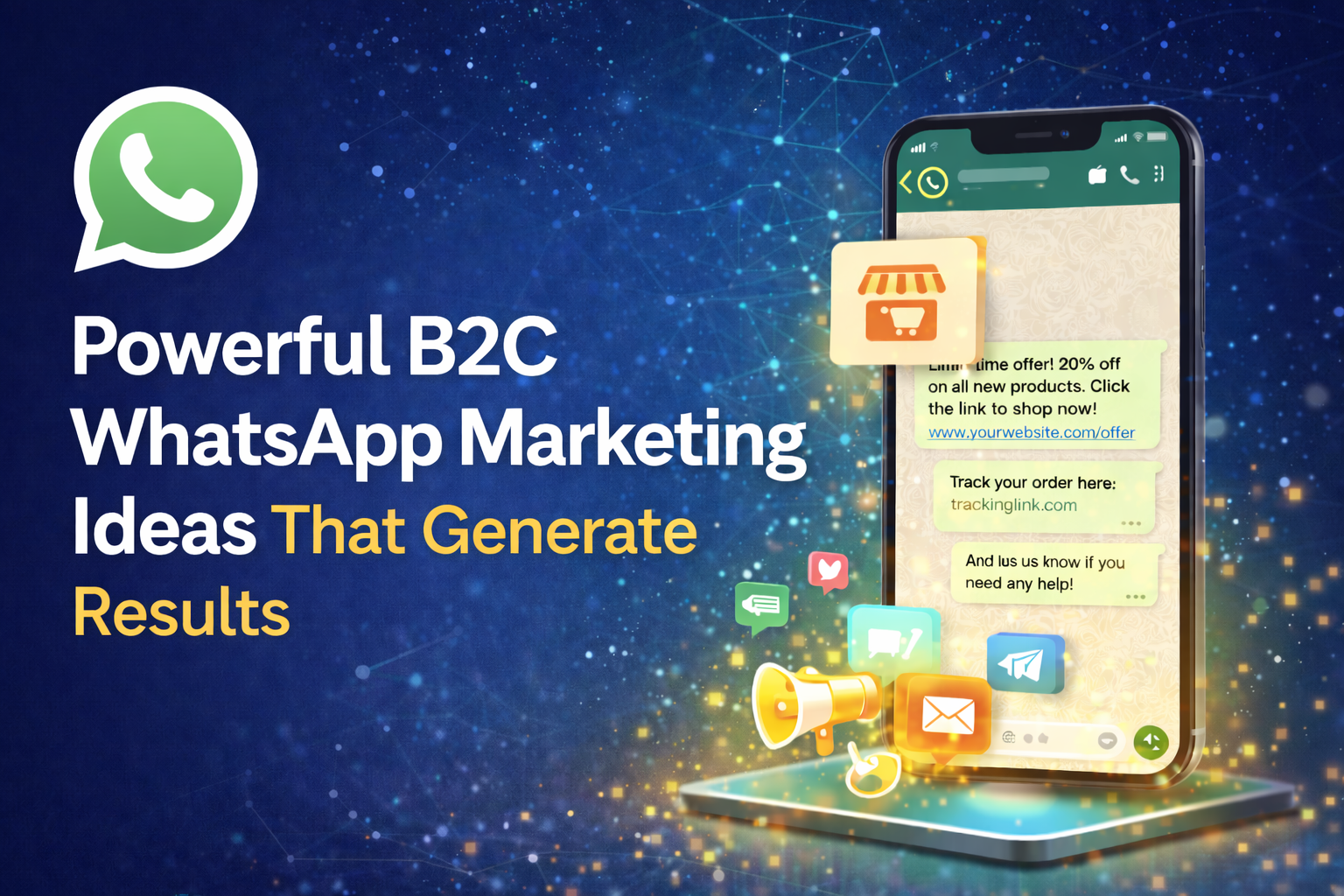
The way customers interact with brands has fundamentally changed. Research consistently shows that over 70% of consumers expect immediate responses when they express interest in an offer. High-intent moments demand more than speed—they require relevance, precise timing, and clarity. This is where WhatsApp Business marketing delivers a clear competitive advantage.
Unlike email or paid ads, WhatsApp operates within a personal, high-attention communication space. When executed correctly, a strong WhatsApp marketing strategy enables brands to engage customers at the exact moment of intent. Businesses that integrate WhatsApp into their outreach consistently see higher engagement because conversations replace clicks, and guided interactions remove landing-page friction. This conversational shift is why WhatsApp marketing delivers stronger and more consistent conversion outcomes.
How Conversational Messaging Drives Higher Conversions
Message design plays a critical role in WhatsApp Business campaigns. High-performing strategies focus on messages that are concise, contextual, and action-oriented. Instead of long promotional content, successful brands guide users through options using buttons, quick replies, and short prompts.
This conversational approach aligns closely with WhatsApp marketing best practices. Customers feel assisted rather than marketed to, which significantly improves response rates. Studies show that interactive messages can increase engagement by over 40% compared to plain-text broadcasts. When these interactions are tracked within a CRM system, businesses gain visibility into customer intent, allowing sales teams to prioritise high-quality leads more effectively.
Automation, CRM, and WhatsApp Growth Strategy
Managing customer conversations manually is neither efficient nor scalable. Automation is a core component of any successful WhatsApp growth strategy. Rather than replacing human interaction, automation enhances it by handling repetitive tasks such as greeting users, answering common questions, and routing conversations to the appropriate team.
When WhatsApp is integrated with CRM systems, businesses can track the complete lifecycle of every conversation. This enables advanced strategies such as chat-based lead scoring, automated follow-ups for inactive users, and personalised recommendations for returning customers. Brands using conversational CRM frameworks report faster sales cycles and stronger alignment between marketing and sales teams.
Industry Use Cases for WhatsApp Business Campaigns
WhatsApp enables businesses across industries to manage demand through fast, structured, and automation-driven engagement.
Ecommerce and D2C Brands
WhatsApp helps customers discover offers, clarify product details, and complete purchases faster. Order updates and post-purchase communication improve customer experience and repeat sales.
Real Estate and Automotive
Businesses use WhatsApp to qualify leads, share property or vehicle details, and schedule site visits or test drives. Automated follow-ups reduce response delays and improve conversion rates.
Education and Training Providers
Institutions manage high enquiry volumes by sharing course information, counselling schedules, and fee details. Automation ensures consistent follow-ups and smoother enrolments.
Service-Based Businesses
Consultants and service providers manage enquiries, quotations, and appointment bookings through WhatsApp. Automated confirmations and reminders reduce no-shows and improve operational efficiency.
Healthcare and Wellness
WhatsApp supports appointment scheduling, service reminders, and ongoing engagement. Automated communication improves attendance rates and customer satisfaction.
Tools, Software, and Cost Considerations for WhatsApp Business Marketing
Executing WhatsApp campaigns at scale requires an integrated ecosystem that combines CRM, broadcasting, and chatbot capabilities. Each component plays a critical role in ensuring scalability, compliance, and conversion-focused execution.
WhatsApp CRM Integration
A WhatsApp-enabled CRM serves as the central system of record. It captures every conversation, tracks customer intent, and synchronises data across marketing and sales teams—enabling faster follow-ups, accurate lead prioritisation, and consistent communication.
WhatsApp Broadcaster
Broadcasting tools allow businesses to initiate campaigns using approved message templates sent to opted-in audiences. Modern broadcasters support segmentation, scheduling, and performance tracking, ensuring messages remain relevant and compliant.
WhatsApp Chatbots
Chatbots manage the immediate response layer by answering common questions, qualifying leads, guiding users through options, and escalating high-intent conversations to human agents. This ensures fast response times while reducing operational load.
WhatsApp Business Marketing Strategy Tips for 2026
- Focus on relevance over frequency to avoid message fatigue
- Space campaigns strategically instead of frequent broadcasts
- Use clear and compliant opt-in mechanisms
- Maintain consistent brand tone and identity
- Keep messages conversational, not promotional
- Use buttons and guided replies to drive action
- Monitor opt-outs and engagement metrics closely
Final Thoughts
In 2026, WhatsApp Business Marketing is no longer optional—it is a core growth channel. A well-executed strategy enables businesses to move beyond generic promotions and build meaningful, data-driven conversations powered by automation and CRM intelligence. Brands that invest in structured planning, compliant execution, and conversational engagement will unlock higher conversions, stronger customer trust, and sustainable growth. With Mcarbon, businesses can transform WhatsApp into a performance-driven growth engine—focused on real outcomes, not just message delivery.